Setmelanotide
Approved only for rare genetic and hypothalamic obesity.
A daily injection for obesity caused by a rare gene fault or by damage to the brain's hunger centre. It is not expected to work for ordinary obesity and is not approved for it. An made by Rhythm Pharmaceuticals, also called Imcivree.
What the evidence shows
Side effects and risks
Who should avoid it: Anyone without one of the named conditions.
How it works
- Where it acts
- MC4 receptors in the hypothalamus, the brain area that sets hunger.
- What it changes
- It restores the fullness signal when the pathway is broken by certain gene faults (POMC, PCSK1, LEPR or Bardet-Biedl syndrome) or by damage to the hypothalamus.
- What people notice
- In those rare conditions, hunger falls within weeks. Skin darkening and injection-site reactions are common.
How it is taken
Daily injection under the skin. Adults and teenagers usually start at 2 mg and move to 3 mg. For hypothalamic obesity the starting dose is 0.5 mg. Specialist prescribing only.
Getting it in the United States
The legal route for Setmelanotide
Get a prescription from a licensed clinician. Fill it at a licensed pharmacy or through the maker's own direct service.
Specialist prescription with insurer approval
Doctors submit a patient start form to the manufacturer and coverage is then sought from the insurer. By mid 2026 over 400 forms were filed for hypothalamic obesity. Not every start form becomes reimbursed treatment.
Routes people use for any peptide in the United States
Telehealth prescribing
Online clinics prescribe after a questionnaire, sometimes with no live doctor visit, and mail the drug. FDA moved in February 2026 to restrict mass-marketed compounded copies and claims that they are generic equivalents.
Risk: Thin medical screening. Compounded versions are not reviewed by FDA for quality.
Covers: Approved GLP-1 drugs, compounded semaglutide and tirzepatide
Source: GZERO Media, Apr 2026
Clinical trial enrolment
The only lawful way to get an unapproved peptide drug with medical monitoring. ClinicalTrials.gov lists eligibility, sites and phone numbers. Researchers note recruitment is hard when people can buy the drug on the gray market instead of risking placebo.
Risk: Possible placebo assignment, strict eligibility and travel to a study site.
Covers: Investigational peptide drugs still in development
Source: NIH, finding a clinical trial
Routes people use for any peptide in the United States
Compounding pharmacy with prescription
A clinician prescribes and a pharmacy compounds. Twelve peptides left the FDA do-not-compound category in April 2026 and a panel backed six in July, but they are not yet formally eligible. Pharmaceutical-grade ingredient is scarce.
Risk: Legal status is unsettled until FDA rulemaking ends. Pharmacies may use research-grade ingredient.
Covers: BPC-157, TB-500, KPV, MOTS-c, Semax, Epitalon and similar
Source: Frier Levitt, Apr 2026
Med spas and weight-loss clinics
Very common. Secret shoppers called 75 clinics and med spas in two states after shortages ended. 92 percent offered compounded semaglutide and 87 percent tirzepatide, often mixed with B vitamins to look custom.
Risk: Four of 23 suppliers lacked sterile compounding licenses and four had disciplinary records.
Covers: Compounded semaglutide and tirzepatide
Source: American Med Spa Association on JAMA Health Forum study, Jul 2026
Concierge and longevity doctors
Cash-pay physicians build peptide plans for wealthy clients. Reporting from San Francisco says some source from overseas channels, domestic research-use-only sellers or the few compounding pharmacies that will supply clinicians.
Risk: A doctor's involvement does not guarantee a pharmaceutical-grade product.
Covers: BPC-157, thymosin alpha-1, Selank, Semax, CJC-1295, ipamorelin, retatrutide
Source: San Francisco Standard, Sep 2025
Cross-border purchase or import
FDA says importing drugs for personal use is illegal in most cases but it may not object to small personal quantities in limited situations. Reporting also describes people travelling to Mexico for injections.
Risk: Packages can be seized. Product origin and cold-chain handling are hard to check.
Covers: Approved prescription peptides sold abroad
Source: FDA, personal importation
Routes people use for any peptide in the United States
Research-chemical websites
Sites sell vials marked for research or not for human consumption, with no prescription. FDA says some ship direct to consumers with dosing directions, and it has sent warning letters. Retatrutide exists only through this route or trials.
Risk: Unknown identity, strength and sterility. No pharmacist or prescriber involved.
Covers: Retatrutide, semaglutide, tirzepatide, BPC-157 and most unapproved peptides
Source: FDA, unapproved GLP-1 drugs page
Direct orders from Chinese factories
Buyers message factory sales agents and pay by crypto or payment app. A minimum order of about ten vials pushes people to buy in bulk and share. A blockchain analysis found US buyers were the largest source of funds.
Risk: Many of the same vendors list fentanyl precursors. Lab reports sent by sellers cannot be verified.
Covers: GLP-1 copies, melanotan II, BPC-157, TB-500, GHK-Cu, epitalon
Source: TRM Labs, Oct 2026
Chat groups and social sellers
Dealers are found through Telegram, WhatsApp, Discord and influencer discount codes. In a May 2026 survey of 1,000 US users, 14.5 percent bought this way and three quarters asked an AI chatbot for dosing.
Risk: 45 percent of social media buyers in that survey reported an emergency or urgent care visit for a reaction.
Covers: Retatrutide and other research-use-only peptides
Source: The Ethos, May 2026
This describes what people do. It is not advice. The decision is yours.
More contextCase reports, what public figures say, videos and articles, when options run out and the chemistry
Case reports
From journals, regulators and studies of users. One case proves little.
Mixed resulttrial result in rare group - 120 people - 2026
In acquired hypothalamic obesity, mostly after craniopharyngioma, BMI fell about 17 percent on the drug and rose 3 percent on placebo over a year. Serious adverse events were more common on the drug, and skin darkening and nausea affected about half.
Source: AJMC, Jul 2026
Mixed resultnews-reported case - 1 person - 2026
A Dutch children's cancer centre described a 14-year-old with hypothalamic obesity after craniopharyngioma treatment who reports constant hunger, worst at home in the evenings. The centre used his account to explain why families want the drug reimbursed.
Source: Princess Maxima Center, Jul 2026
Benefit reporteduser survey - 2023
A Bardet Biedl Syndrome Foundation survey and interviews submitted to the Canadian review found that patients and caregivers who had used the drug reported less hunger, better weight control and better quality of life. Most respondents were from the US.
What experts and influencers say
Paraphrased from the linked sources.

As senior author of the phase 3 hypothalamic obesity trial, said patients and families urgently need effective options. The paper also flagged fluid and electrolyte risks in this group.
Source: AJMC, Jul 2026
Christian RothWebsiteRecommends
Photo source: seattlechildrens.org
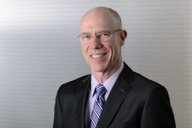
Reported a strong US launch in acquired hypothalamic obesity after the March 2026 approval, with over 400 patient start forms from about 300 prescribers by mid 2026.
David MeekerWebsiteRecommends
Money: Heads the company that sells the drug
Photo source: fiercebiotech.com
Advised the Dutch health minister not to extend reimbursement to obesity from Bardet-Biedl syndrome, concluding that added value for this group had not been demonstrated.
Zorginstituut NederlandSourceWarns against
Said children with hypothalamic obesity after brain tumors had almost no treatment before, that treated children regained energy and emotional stability, and that she hopes Dutch reimbursement follows soon.
Source: Princess Maxima Center, Jul 2026
Hanneke van SantenSourceRecommends
Money: Led the Dutch arm of a trial funded by the manufacturer
Recommended public reimbursement for Bardet-Biedl syndrome only with conditions, including a price cut. Found the list price far above its value threshold, at over 2 million dollars per quality-adjusted life year.
CADTH (now Canada's Drug Agency)SourceMixed view
Did not recommend the drug for Bardet-Biedl syndrome on NHS Scotland because the company made no submission for that use.
Source: SMC advice, Jan 2024
Scottish Medicines ConsortiumSourceWarns against

Commenting on the NICE decision for Bardet-Biedl syndrome, described the constant extreme hunger patients live with, which drives early obesity.
Philip BealesWebsiteRecommends
Photo source: path4hcps.com
Watch and read
Explainers, reporting and podcasts worth your time. Summaries are ours. No sellers.
Rhythm eyes label expansion after Imcivree helps patients with brain damage-related obesity lose weight
Zoey Becker, reporter
Reports phase 3 results of setmelanotide in obesity caused by hypothalamic damage and the maker's plan to seek wider approval from regulators.
Short, neutral news summary of the pivotal trial
Setmelanotide lowers BMI by 5% or more for most people with hypothalamic obesity
Summarises a small phase 2 study of 18 children and adults with hypothalamic damage, covering BMI and hunger changes over 16 weeks and one year.
Plain summary of the published study results
When options run out
Uses people turn to when standard treatment has failed.
Hypothalamic obesity after brain tumor treatment
- Who
- Children and adults whose hypothalamus was damaged by craniopharyngioma or its surgery, leaving relentless hunger and no prior targeted drug.
- Evidence
- One phase 3 trial of 120 people published in NEJM in 2026. Large BMI effect. More serious adverse events than placebo.
- Route
- Approved by the FDA in 2026-03 and authorised in the EU. Country launches in Europe expected from 2027.
Prader-Willi syndrome hyperphagia
- Who
- Children and young adults with Prader-Willi syndrome, whose extreme hunger burdens them and their caregivers.
- Evidence
- Interim open-label phase 2 data in 18 people: mean BMI fell about 3 percent at six months and 8 of 10 participants with marked hyperphagia improved. No placebo group. Not approved for this use.
- Route
- Ongoing phase 2 trial led from the University of Florida
Pre-approval access for Bardet-Biedl syndrome
- Who
- Patients with severe obesity and hyperphagia from Bardet-Biedl syndrome who had no authorised option before approval.
- Evidence
- French reviewers later noted about a third of 31 trial patients lost at least 10 percent of body weight in a year, versus a tenth of a historical cohort.
- Route
- US expanded access program opened in 2021 on physician request. France granted funded early access in 2022.
Source: Rhythm Pharmaceuticals, Sep 2021
Legal last-resort routes
Expanded access (compassionate use)
For a serious or life-threatening condition with no comparable alternative and no trial you can join. Your physician asks the company for the drug, then files with FDA and an ethics board. The company can refuse. Costs are often not insured.
Right to Try
For a life-threatening condition after approved options are exhausted and no trial is open to you. The drug must have finished Phase 1 and be in active development. Your doctor asks the manufacturer directly. FDA does not review requests.
Source: FDA, Right to Try
Trial finders
Search ClinicalTrials.gov by condition or drug name, check eligibility and call the listed site. ResearchMatch is a free NIH-funded registry that lets researchers find you. Discuss risks with your own clinician before enrolling.
Source: NIH, finding a clinical trial
Personal import for serious conditions
FDA may not object when a US citizen imports up to about three months of a drug for a serious condition with no effective US treatment, with written personal-use confirmation and a US doctor's details. It is discretion, not a right.
Source: FDA, personal importation
Patient-specific compounding
When the approved product cannot meet a specific need of an identified patient, a prescriber can order a compounded version from a licensed pharmacy. Lower price alone does not qualify. Ingredients must be pharmaceutical grade.
Amino-acid sequence
Positions 2 and 8 are joined by a disulfide bridge, closing a ring. Striped tiles are mirror-image (D) amino acids, which resist breakdown.
Questions people ask
Does setmelanotide work for ordinary obesity?
No. It is not expected to work for ordinary obesity and is not approved for it. It restores a broken hunger pathway in a few rare conditions.
Who is setmelanotide approved for?
People with obesity caused by POMC, PCSK1 or LEPR deficiency or Bardet-Biedl syndrome, and obesity after damage to the hypothalamus. The hypothalamic use was approved in the US in March 2026 from age 4, and the EU, UK, Japan and Canada followed between May and September 2026.
How much weight do people lose on setmelanotide?
In trials, at least 10% weight loss was seen in 8 of 10 people with POMC or PCSK1 deficiency and 5 of 11 with LEPR deficiency.
Does Imcivree darken your skin?
Yes. Skin and moles darken in most people who take it. Spontaneous erections, nausea and injection-site reactions are also common.
What are the serious risks of setmelanotide?
Depression and suicidal thoughts have been reported, and the label asks for monitoring.
Your notebook
Taking it? A ten-second daily check-in keeps a record of how you feel, to talk through with your clinician.
Sources
- Imcivree US prescribing information (DailyMed)
- EMA: Imcivree product page
- Rhythm: FDA approval for hypothalamic obesity (19 Mar 2026)
- Rhythm: news releases (UK, Japan and Canada approvals)
Structure: PubChem